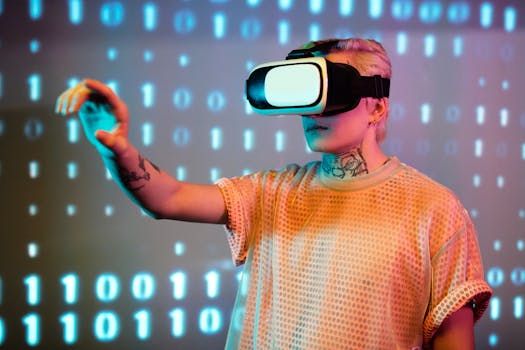
The Rise of Virtual Reality: An Exploration of Its Potential Uses
Virtual reality (VR) has long been a subject of science fiction, promising immersive experiences beyond the boundaries of our physical world. In recent years, however, VR has transcended fantasy, emerging as a transformative technology with real-world applications across industries. With global spending on VR and augmented reality (AR) products and services projected to reach $72.8 billion by 2024, according to the International Data Corporation (IDC), the momentum behind VR is undeniable. But what exactly is fueling the rise of VR, and where might this technology take us next? This article delves deep into the burgeoning uses of virtual reality, highlighting how it’s changing the way we learn, work, socialize, and entertain ourselves.
The Technological Foundation: How VR Has Evolved
VR is not a recent invention; its roots date back to the 1960s, with early head-mounted displays like the "Sword of Damocles." However, it is only in the past decade that VR has become practical and accessible for consumers and businesses alike. Several factors have contributed to this rapid evolution:
- Advancements in graphics processing units (GPUs), making high-fidelity environments possible. - Dramatic reductions in hardware costs, with consumer headsets like the Meta Quest 3 available for under $500. - Improved motion tracking and haptic feedback, increasing immersion and reducing motion sickness. - The development of robust VR software platforms, such as SteamVR and Oculus Home, which have cultivated thriving developer ecosystems.Today, VR devices range from entry-level smartphone-based viewers to high-end tethered systems offering room-scale experiences. According to Statista, over 14 million VR headsets were shipped globally in 2022—a number expected to climb as both enterprise and consumer demand grows.
.png)
Revolutionizing Education and Training with VR
One of the most promising arenas for VR is education and professional training. Traditional learning often struggles to engage students or simulate complex, real-world scenarios. VR addresses these challenges by creating interactive, risk-free environments for experiential learning.
For example, medical schools have adopted VR platforms like Osso VR, which allow students to perform virtual surgeries. In 2021, a study published in $1 found that medical residents trained in VR completed procedures 29% faster and made six times fewer errors than those using conventional methods.
Similarly, major companies like Walmart and Boeing use VR-based simulations to train employees. Walmart, in partnership with STRIVR, equipped 4,600 stores with VR headsets to train over one million workers on customer service, compliance, and safety. This approach has led to a 10-15% improvement in employee test scores.
Educational institutions are also exploring VR for remote learning. Platforms like ENGAGE and ClassVR enable students to participate in virtual field trips, collaborate in 3D spaces, and interact with digital objects—making abstract concepts tangible and memorable.
Healthcare Applications: From Therapy to Surgery
VR is reshaping healthcare delivery in ways previously unimaginable. Beyond training, VR is now used in therapy, pain management, and even as a tool during surgical procedures.
- $1 Cedars-Sinai Medical Center in Los Angeles uses VR experiences to distract patients during painful procedures. Their research, published in 2020, showed that patients using VR reported a 24% reduction in pain scores. - $1 VR exposure therapy is gaining traction for phobias, PTSD, and anxiety disorders. By safely simulating triggering environments, therapists can guide patients through gradual desensitization. Studies indicate that VR-based exposure therapy is as effective as traditional methods, with a 2021 meta-analysis revealing success rates of 66%. - $1 VR allows surgeons to visualize complex anatomy and rehearse procedures in 3D. Companies like Surgical Theater provide VR reconstructions of patient scans, improving surgical accuracy and patient outcomes.The potential for VR in healthcare is vast, ranging from rehabilitation exercises for stroke patients to social skills training for individuals with autism.
VR in Business and Remote Collaboration
The COVID-19 pandemic accelerated the shift to remote work, highlighting the limitations of conventional video conferencing. VR offers a compelling alternative, enabling immersive, lifelike collaboration regardless of physical location.
- $1 Platforms such as Spatial and Horizon Workrooms create 3D meeting rooms where users, represented by avatars, can share presentations, brainstorm using virtual whiteboards, and interact naturally. PwC’s 2022 study found that employees trained in VR were up to 275% more confident in applying new skills compared to traditional e-learning. - $1 Automotive giants like Ford and BMW employ VR for design reviews, allowing teams to inspect virtual prototypes before manufacturing. This approach cuts development time and reduces costly errors. - $1 Retailers are experimenting with VR showrooms, where customers can browse and interact with products in 3D. IKEA’s VR kitchen experience lets shoppers design and walk through their dream kitchens before making purchases.As companies seek more engaging ways to connect distributed teams and customers, VR’s role in business is only set to expand.
Transforming Entertainment and Social Experiences
Perhaps the most visible impact of VR is in entertainment. From gaming to concerts, VR is reinventing how we play, watch, and interact.
- $1 VR gaming has exploded, with platforms like PlayStation VR and Meta Quest boasting millions of users. The VR gaming market was valued at $21.8 billion in 2023, according to Grand View Research. Popular titles like Beat Saber and Half-Life: Alyx have set new standards for immersion and interactivity. - $1 VR concerts and sports events let users experience front-row seats from home. In 2022, Fortnite hosted a VR music event featuring Ariana Grande, attracting over 1 million virtual attendees. - $1 Platforms like VRChat and Rec Room offer persistent virtual spaces where users socialize, create content, and build communities. In 2023, VRChat reported over 30,000 concurrent users daily, highlighting VR’s potential as a new social frontier.VR is also enhancing storytelling and filmmaking. 360-degree movies and interactive narratives place viewers inside the action, blurring the line between observer and participant.
Comparing Key VR Applications: Data Overview
To better understand the breadth of VR’s impact, the following table summarizes some of its major applications, estimated user bases, and measurable benefits:
| Application | Estimated Users (2023) | Key Benefits | Notable Example |
|---|---|---|---|
| Education/Training | Over 1 million (Walmart alone) | Faster skill acquisition, fewer errors | Osso VR, STRIVR |
| Healthcare Therapy | 10,000+ clinics globally | Pain reduction, effective exposure therapy | Cedars-Sinai, Oxford VR |
| Business Collaboration | 30,000+ companies | Improved engagement, reduced travel costs | Spatial, Horizon Workrooms |
| Gaming and Entertainment | Over 20 million active users | Immersive gameplay, social interaction | Meta Quest, PlayStation VR |
| Social Platforms | 300,000+ daily users | New forms of socialization, creativity | VRChat, Rec Room |
Challenges and the Road Ahead for Virtual Reality
Despite its rapid ascent, VR faces several hurdles before reaching mainstream ubiquity:
- $1 High-end VR hardware remains relatively expensive and bulky. While devices are becoming more affordable, there is still a need for lighter, wireless solutions with longer battery life. - $1 Developing compelling VR content is resource-intensive. There is a shortage of skilled VR developers and designers, slowing the pace of content innovation. - $1 Approximately 25-40% of first-time users report some degree of motion sickness. While advancements like higher refresh rates and better tracking help, it remains a barrier for some. - $1 VR’s reliance on sight and mobility can exclude people with certain disabilities. Developers are working on more inclusive interfaces and experiences.Looking forward, trends such as the integration of artificial intelligence, improvements in hand and eye tracking, and the rise of cloud-based VR streaming promise to overcome many of these obstacles. Industry analysts predict that by 2030, over 50 million people will use VR regularly, as the technology becomes more seamless and ingrained in daily life.
Final Thoughts on the Potential of Virtual Reality
The rise of virtual reality represents more than a technological milestone—it signals a profound shift in how we experience and interact with the world. VR’s potential uses stretch far beyond entertainment, touching education, healthcare, business, and social connections. As costs fall and content becomes richer, VR is poised to become an integral part of our digital lives, fostering new ways to learn, heal, work, and play. While challenges persist, the trajectory of VR innovation suggests that a virtual future is not just possible—it’s already unfolding around us.