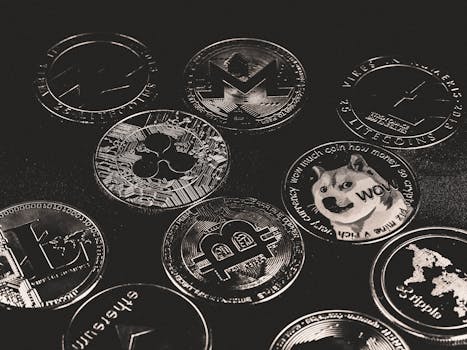
Understanding Cryptocurrency: An Introduction for Beginners
Cryptocurrency has swiftly moved from a niche interest to a global phenomenon, capturing headlines and the imagination of investors, technologists, and everyday people alike. Yet, despite its popularity, many find the concept of digital currencies confusing or intimidating. If you’re new to cryptocurrency, you’re not alone — a 2023 Pew Research Center survey found that only 17% of Americans have ever invested in or used cryptocurrency, and nearly half of those surveyed admitted they know little to nothing about how it works. This article demystifies the basics, exploring what cryptocurrency is, how it works, its potential benefits and risks, and why it’s reshaping modern finance.
What Is Cryptocurrency? The Digital Money Revolution
At its core, cryptocurrency is a type of digital or virtual money. Unlike traditional currencies such as the dollar or euro, cryptocurrencies are not issued or regulated by any central authority like a government or bank. Instead, they rely on cryptography — complex mathematical algorithms — to secure transactions and control the creation of new units. The first and most famous cryptocurrency, Bitcoin, launched in 2009. Since then, thousands of cryptocurrencies have emerged, each with unique features and uses.
Key characteristics of cryptocurrency: - $1 No single entity controls the currency. Transactions are processed and verified by a distributed network of computers (known as nodes). - $1 Most cryptocurrencies operate on public ledgers called blockchains, which record every transaction for anyone to view. - $1 Many cryptocurrencies have a capped supply. For example, Bitcoin is limited to 21 million coins, a design intended to help prevent inflation.According to CoinMarketCap, as of June 2024, there are over 24,000 different cryptocurrencies, with a total market capitalization exceeding $1.2 trillion. Bitcoin remains the largest, comprising over 45% of the total crypto market cap.
.png)
How Does Cryptocurrency Work? A Look at Blockchain Technology
Understanding cryptocurrency means understanding the technology that powers it: blockchain. Think of blockchain as a digital ledger, similar to a record book, but stored across thousands of computers around the world. Here’s how it works:
1. $1 When you send cryptocurrency, you broadcast a request to the network. 2. $1 Network computers (nodes) validate the transaction using predefined rules. 3. $1 Once approved, the transaction is grouped with others into a “block.” This block is then added to the chain of previous transactions — hence, “blockchain.” 4. $1 Once recorded, blocks can’t be altered, providing a permanent and tamper-resistant record.This system enables trustless transactions: you don’t need to rely on a bank or third party to ensure the transaction’s validity. Instead, the network’s consensus mechanisms (such as Proof of Work or Proof of Stake) ensure accuracy and security.
A real-world analogy: Imagine a shared Google Doc where every change is tracked, and no one can edit historical data without everyone noticing. That’s blockchain in a nutshell.
Popular Cryptocurrencies: Comparing the Top Digital Coins
While Bitcoin may be the most recognizable name, it’s far from the only player. Other cryptocurrencies offer different features, purposes, and underlying technologies. The table below compares some of the most prominent coins as of June 2024:
| Name | Launch Year | Market Cap (USD, June 2024) | Primary Use | Unique Feature |
|---|---|---|---|---|
| Bitcoin (BTC) | 2009 | $550 billion | Digital Gold, Store of Value | First mover, Scarcity (21 million cap) |
| Ethereum (ETH) | 2015 | $220 billion | Smart Contracts, Decentralized Apps | Turing-complete programming language |
| Binance Coin (BNB) | 2017 | $50 billion | Exchange Utility Token | Discounts on Binance exchange, DeFi |
| Solana (SOL) | 2020 | $30 billion | High-Speed Transactions | Ultra-fast, Low fees |
| Tether (USDT) | 2014 | $110 billion | Stablecoin, Dollar Peg | Price stability, Used for trading |
As the table shows, cryptocurrencies serve diverse functions — from acting as a digital alternative to gold (Bitcoin) to powering complex decentralized applications (Ethereum) and providing stable, dollar-pegged options for traders (Tether).
How to Buy, Store, and Use Cryptocurrency: A Beginner’s Walkthrough
If you’re interested in owning cryptocurrency, the process is increasingly accessible. Here’s a step-by-step overview:
1. $1 Platforms like Coinbase, Binance, and Kraken let you buy crypto with traditional money. In 2023, Coinbase reported over 108 million verified users globally. 2. $1 Due to global regulations, most exchanges require identity verification to prevent fraud and money laundering. 3. $1 You can transfer funds via bank transfer, credit/debit card, or even PayPal on some platforms. 4. $1 Select your desired coin and execute the purchase. 5. $1 While exchanges offer built-in wallets, many experts recommend transferring your crypto to a private wallet for enhanced security. There are two main types: - $1 Connected to the internet (e.g., mobile apps, desktop wallets), convenient but more vulnerable to hacking. - $1 Offline storage (e.g., hardware wallets, paper wallets), safer from online threats.An example: After purchasing Ethereum on Coinbase, you might transfer it to a Ledger Nano S hardware wallet for long-term, offline protection.
Cryptocurrency is increasingly accepted by merchants worldwide. In 2024, more than 15,000 businesses, including major companies like Microsoft and Starbucks, accept Bitcoin payments, either directly or via payment processors.
The Benefits and Risks: What Every Beginner Should Know
Cryptocurrency offers exciting opportunities, but it’s not without drawbacks. Understanding both sides is crucial before diving in.
$1 - $1 Anyone with internet access can participate, regardless of location or background. - $1 International payments can be cheaper and faster than using banks, with fees often under 1%. - $1 No central authority can freeze your account or reverse your transactions. $1 - $1 Crypto prices can swing wildly; for example, Bitcoin’s price ranged from $16,500 to $44,000 in just 18 months (2022-2024). - $1 Hacks, scams, and lost passwords can result in permanent loss — there’s no "bank customer service" to call for recovery. - $1 Laws vary widely by country and are evolving rapidly, potentially impacting the value and legality of certain coins.A 2024 Chainalysis report estimated that crypto-related scams cost users $1.5 billion globally in 2023 alone, highlighting the importance of careful research and security practices.
Why Cryptocurrency Is Reshaping the Future of Finance
Cryptocurrencies are more than just digital money — they’re catalysts for innovation. Here are a few transformative trends:
- $1 Platforms like Uniswap and Aave let users lend, borrow, and trade without banks, handling over $50 billion in assets in 2024. - $1 Unique digital collectibles and art sales exploded in popularity, with NFT markets generating $24 billion in sales in 2023. - $1 Remittances sent via cryptocurrencies can be faster and cheaper than traditional wire transfers, benefiting millions of migrant workers worldwide.Financial inclusion is another powerful benefit. The World Bank estimates that 1.4 billion adults remain unbanked globally. With just a smartphone, anyone can access cryptocurrency networks, providing new tools for saving, investing, and transacting.
Even traditional institutions are taking notice. In 2024, over 25% of global banks were experimenting with blockchain technology or offering crypto-related products, according to a Deloitte survey.
Final Thoughts: Taking Your First Steps in Cryptocurrency
Venturing into cryptocurrency is both exciting and daunting. The technology promises to democratize finance, empower the unbanked, and spark innovation across industries. Yet, it also demands a healthy respect for its risks, a willingness to learn, and a cautious approach.
If you’re just starting, take time to research, use reputable platforms, and start with small amounts you can afford to lose. Remember — in the world of digital assets, knowledge is your best investment.